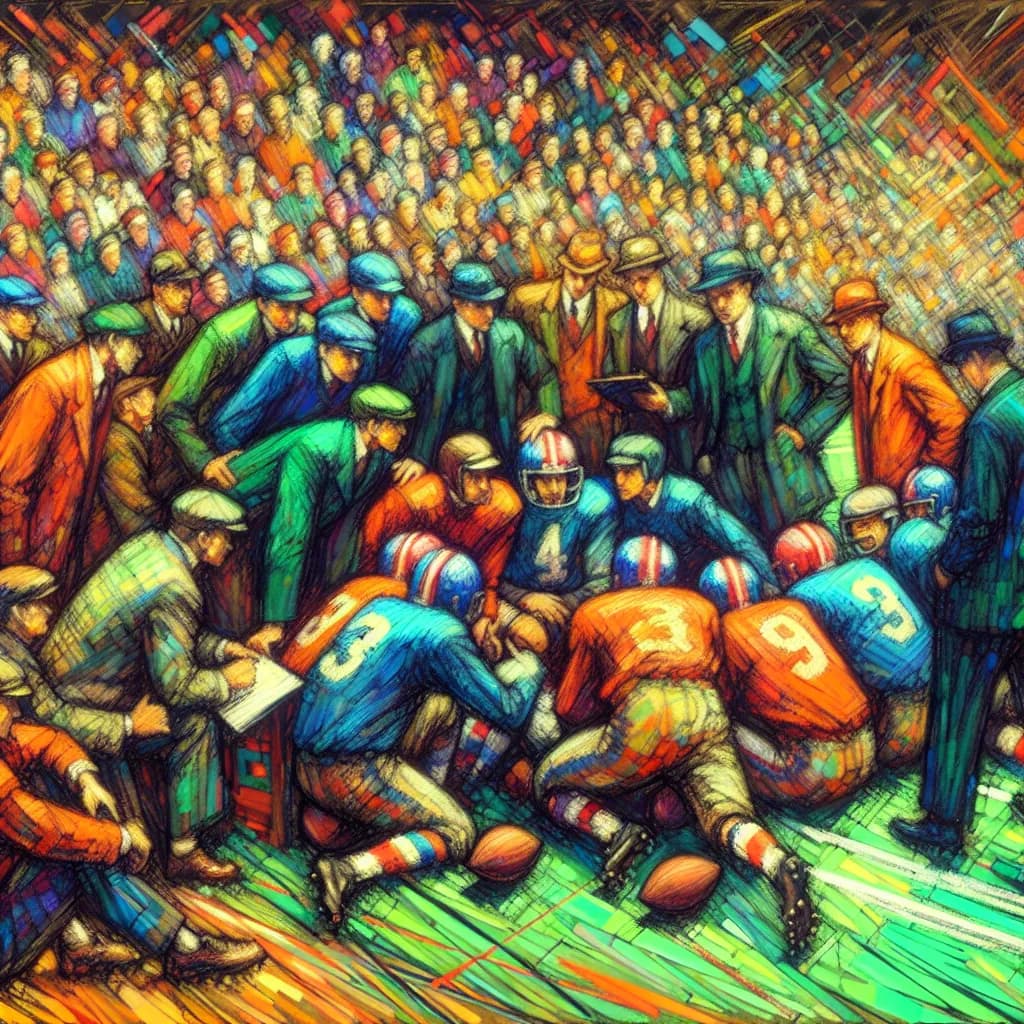
Pooch Kicks: Controlling Field Position

Published on
Tuesday, May 21, 2024
Pooch Kicks: Controlling Field Position
===========================================
Authors

Name
Sports Tips
Twitter
Pooch Kicks: Controlling Field Position
Pooch kicks are an advanced special teams strategy in American football, aimed at controlling field position and limiting the opponent's return game. Unlike long, booming punts, pooch kicks involve a shorter, higher-arcing kick designed to land in a specific area of the field. Read on to understand the technique and strategic applications of pooch kicks, whether you're a player looking to refine your skills or a coach aiming to tighten your special teams play.
Technique Breakdown
Mastering the pooch kick involves precision and consistency. Here's a step-by-step breakdown of the essential technique:
Kicking Mechanics:
- Stance: Approach the kick with a slightly more upright posture compared to a standard punt.
- Contact Point: Strike the ball closer to its lower half. This helps in achieving the desired hang time and shorter distance.
- Follow-Through: Keep your follow-through controlled and compact to maintain accuracy.
Aiming and Execution:
- Target Zones: Aiming within the 20 to 30 yard-line can trap opponents closer to their end zone, minimizing their offensive options.
- Hang Time: Prioritize hang time over distance. A well-placed pooch kick should give your coverage team enough time to get downfield.
- Spin Control: A pooch kick often benefits from backspin, causing the ball to slow down or bounce unpredictably, complicating the return.
Strategic Implementation
The strategic value of pooch kicks cannot be understated. Here’s how they can be effectively integrated into game plans:
Situational Awareness:
Situation
Rationale
Pinning Opponents
In late-game scenarios or leading scores, trapping the opponent deep can limit their play options.
Unfavorable Weather Conditions
Windy or rainy conditions can make regular punts risky; pooch kicks reduce the chances of mishandles.
Playing Against Strong Returners
Neutralizing elite return specialists by reducing their operational space improves your field positioning.
Coaching Tips:
- Film Study: Use game tapes to identify opponents' tendencies and weaknesses in their return setup.
- Practice Drills: Incorporate pooch kick drills into regular practice sessions. Emphasize precision aiming and situational drills.
- Communication: Ensure your coverage team understands the trajectory and expected drop zones of pooch kicks.
Player Insights
Executing a pooch kick is not purely mechanical; it carries a significant mental component. Here’s some wisdom from seasoned players:
Quotes from the Gridiron:
"A good pooch kick is like a chess move. It's about foresight and precision, not just power." — Pat McAfee, Former NFL Punter
Common Mistakes to Avoid
Overpowering the Kick:
- Longer kicks yield more return space; prioritize placement over power.
Inconsistent Angles:
- Practice landing kicks within the desired zone consistently to build reliability.
Ignoring Coverage Team Coordination:
- Ensure synchronous timing between the kicker and coverage unit to maximize efficiency.
Conclusion
Pooch kicks are a blend of art and science in American football. Through meticulous technique, strategic foresight, and cohesive team effort, these kicks can dramatically enhance your control over the game's field position. Whether you are a player perfecting the kick or a coach strategizing game plans, the principles outlined here will guide you toward leveraging this unique skill effectively.
Don't just play the game—master it with well-placed, well-timed pooch kicks!
Discuss on Twitter • View on GitHub
Tags
Previous Article
Pre-Game Routine: Establishing Consistency